
5 Reasons to Study in Puebla, Mexico’s Best-Kept Secret
Puebla is one of Mexico’s oldest cities, so you could say history and preservation are at the heart of everything here. Deeply rooted in tradition, Puebla is also a city that embraces color, culture, food, and celebration.
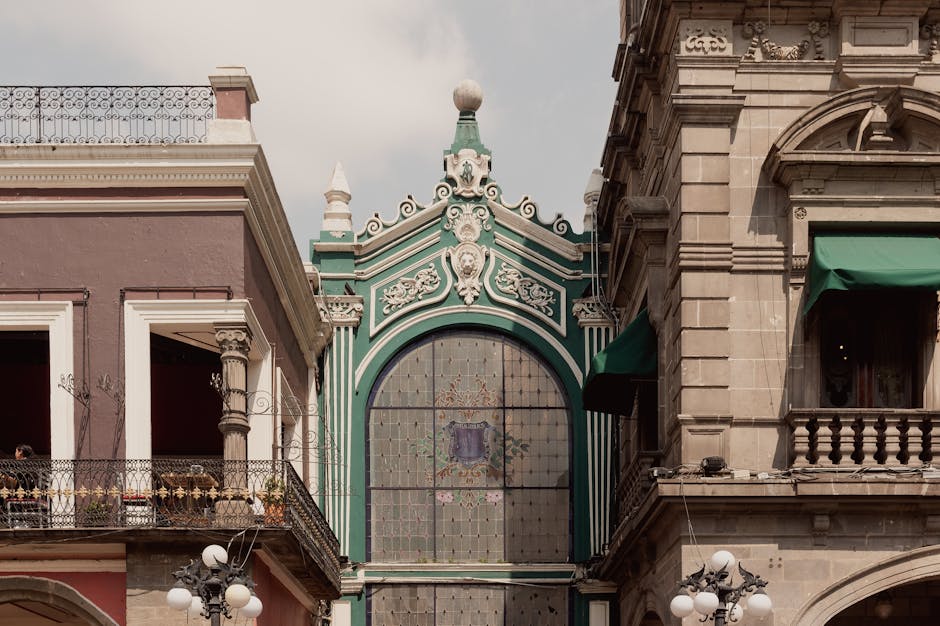
Puebla is one of Mexico’s oldest cities, so you could say history and preservation are at the heart of everything here. Deeply rooted in tradition, Puebla is also a city that embraces color, culture, food, and celebration.
As a must-visit destination, studying in Puebla means embarking on the adventure of a lifetime.
It’s time to get acquainted with one of Mexico’s best-kept secrets...
Puebla’s Historic Center Is a UNESCO World Heritage Site
Puebla’s history is impressive, to say the least. Founded in 1531, Puebla is a city with a dual heritage, since Spaniards and Indigenous peoples originally lived separately. The only remaining evidence of that division can be seen in the Talavera tiles decorating houses, benches, fountains, and stairways on the Spanish side, as well as in the celebrations of Cinco de Mayo on the Indigenous side.
Puebla’s historic center was designated a UNESCO World Heritage Site in 1987, a remarkable honor that few cities in the world can claim. There is a great deal for both residents and visitors to appreciate here.
As one of the best-preserved and oldest colonial cities in Latin America, Puebla is home to many genuine archaeological sites, including the Mural of Los Bebedores, Yohualichan, and Tehuacán Viejo.
The city itself has more than 50 museums and a wide range of exhibits. From natural history to pre-Hispanic culture and art, as well as its impressive colonial and religious museums, battle sites, and contemporary art museums, Puebla’s status as a World Heritage city is beyond question. Poblanos are proud of their rich culture and history, and they are not shy about telling you so.
Make sure to carve out time to play tourist while you study here and take advantage of the monthly Museum Night, when you can visit Puebla’s museums and cultural sites for free. Some of our favorites are:
- Loreto and Guadalupe Forts - the battle against the French on May 5 took place here
- Puebla’s Secret Convent of Santa Mónica
- José Luis Bello y González Museum
- Bóvedas Bridge - it tells many of Puebla’s legends
- Museum of Puppetry and Mexican Puppets
- Museum of the Mexican Revolution
- Gallery of Sacred Art
- Amparo Museum
- International Museum of the Baroque
- The Art Chapel at the Universidad de las Américas Puebla (UDLAP) - located in a beautiful Art Nouveau building, this is a space open to local, national, and international art exhibitions. It also hosts all kinds of cultural events.
You’ll Join Puebla’s Impressive International Student Community
Speaking of universities...
Puebla is one of the most popular destinations in Mexico for international students. The smaller city of Cholula, no more than a 30-minute drive from Puebla City, is home to one of the country’s most prestigious higher education institutions.
Universidad de las Américas Puebla was recognized as a top-50 institution in the QS Latin America University Rankings 2020. Known for its research and investment in research programs, it welcomes students from all over the world, who can choose from more than 50 undergraduate programs, 20 master’s programs, and 6 doctoral programs.
Experience Year-Round Celebrations and Festivals
While studying in Puebla, you’ll often find yourself in the middle of some kind of celebration.
Perhaps the most famous is Día de Muertos, or the Day of the Dead, observed every year on November 2. Death is often treated as a disturbing and solemn topic, but this Mexican holiday honors the dead through prayers, remembrance, and celebration offered by their loved ones. Bright colors and flowers, especially marigolds, decorate these celebrations to symbolize the vitality of life.
Taste Puebla’s Self-Proclaimed “Kitchen of Mexico” and Satisfy Your Sweet Tooth on Candy Street
Dining at any restaurant in Puebla offers a real taste of the city’s rich culinary history.
Puebla is the birthplace of some of Mexico’s most iconic dishes. From the famous Calle de los Dulces, or Candy Street, to hearty home kitchens, recipes for Puebla’s celebrated mole poblano, a remarkable sauce made with herbs, chilies, chocolate, and fragrant spices, are never exactly the same.
Be sure to try some of Puebla’s other delightful dishes while you study here, or you may regret missing them forever.
- Chalupas - small fried tortillas topped with shredded meat such as chicken or pork, chopped onions, chilies, and red and/or green salsa
- Molotes - fried tortillas stuffed with different fillings and covered in sauce and cream
- Chiles en nogada - chilies stuffed with a mix of shredded meat and dozens of delicious, aromatic ingredients, including fruit and spices. This dish is said to have first been prepared in Puebla to welcome the future emperor Agustín de Iturbide.
- Santa Clara cookies - covered with a delicious layer of pumpkin seed candy
- Cemita poblana - another famous Puebla dish
Explore Puebla’s Nine “Magical Towns”
Studying abroad comes with all kinds of new opportunities, including trying new foods, speaking a new language, and learning about a new culture. But few opportunities let you explore Magical Towns.
In the state of Puebla, there are nine Magical Towns, so named because of their cultural and historical roots and the extraordinary preservation of ancestral traditions. In these Magical Towns, visitors can explore wonders and sites dating back as far as 200 BC.
See how many you can check off while you’re in Puebla.
- Atlixco - come here for the chance to see one of Mexico’s most important volcanoes, Popocatépetl
- Chignahuapan - a colorful town in the mountains where you can visit its hot springs and the waterfall of Quetzalapa
- Cholula - an impressive archaeological zone with countless churches. Locals will tell you there are 365 churches here, one for every day of the year. It is also home to the world’s largest pyramid, on which the Sanctuary of Our Lady of Remedies now stands.
- Huauchinango - surrounded by rivers and waterfalls, with unparalleled natural beauty
- Pahuatlán - a natural attraction where exquisite crafts are made from amate, or bark paper, and coffee of excellent quality is produced
- Cuetzalan - found among the mountains and famous for its cobblestone streets, traditional whitewashed houses, and temples
- Tlatlauquitepec - located in the mountains, this town still preserves its pre-Hispanic traditions and offers caves and hills for outdoor activities
- Xicotepec de Juárez - one of the region’s most important coffee towns. It’s a perfect place for coffee lovers.
- Zacatlán de las Manzanas - home to abundant orchards and the production of a variety of foods and drinks
And, of Course, There Are Plenty of Adventure-Filled Options
After a long week of studying, you’ll want to get out and explore, and there’s no better place to do that than Puebla.
The state of Puebla has abundant mountains, rivers, lakes, lagoons, waterfalls, caves, and even volcanoes, all waiting to be explored.
Excursions to Popocatépetl, nicknamed the “Smoking Mountain,” and Iztaccíhuatl, also known as the “Sleeping Woman,” are popular with students and visitors alike.
But if climbing volcanoes is not your thing, how about climbing into one instead? A curious visit to Cuexcomate, an inactive geyser considered the world’s smallest volcano, lets visitors enter the crater by way of a spiral staircase.
Related Articles
Finding an MSc that will lead to a global career
Dec 23, 2025
How your business education could solve global challenges
Dec 18, 2025
4 reasons to study in Glasgow
Aug 2, 2024
Alumni interview: My MBA experience studying in France
Mar 10, 2024