 选校
选校
学校简介
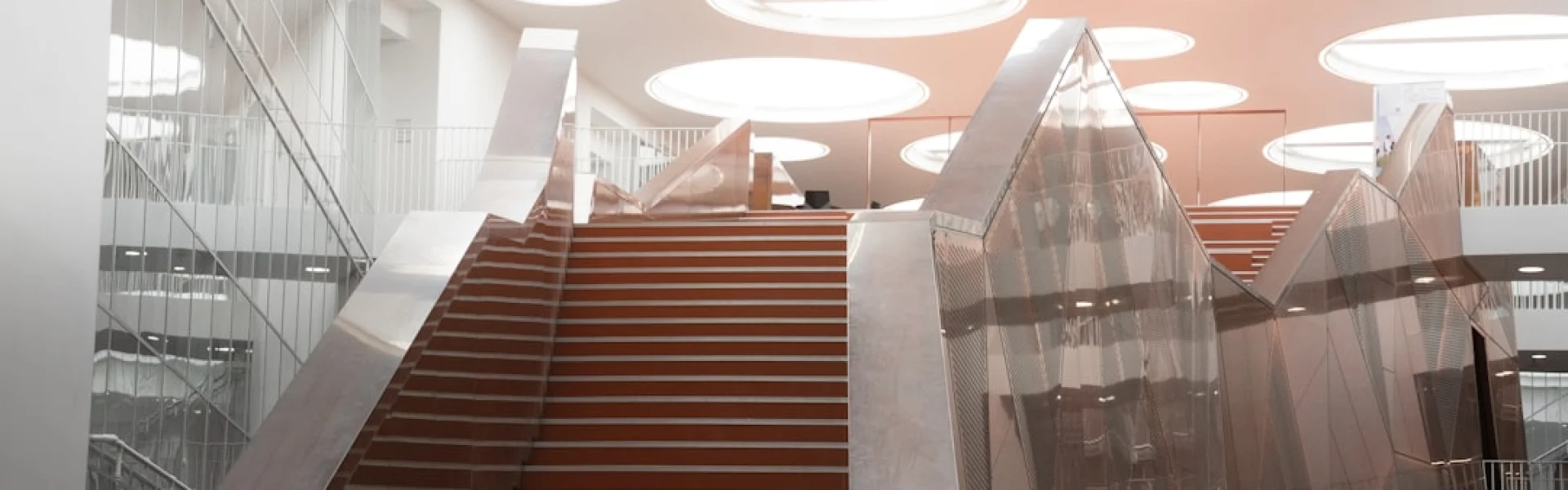
The University of Southern Denmark (SDU) is a fusion from 1998. The University received its first students in Odense in September 1966. Since then, it has gone from strength to strength. SDU now have five faculties and about 32,000 students, more than 15% of whom come from abroad. Our more than 4,000 employees are divided between the main campus in Odense and regional campuses in Slagelse, Kolding...
The University of Southern Denmark (SDU) is a fusion from 1998. The University received its first students in Odense in September 1966. Since then, it has gone from strength to strength. SDU now have five faculties and about 32,000 students, more than 15% of whom come from abroad. Our more than 4,000 employees are divided between the main campus in Odense and regional campuses in Slagelse, Kolding, Esbjerg, Sønderborg and Copenhagen. Several international reports testify that we conduct world-class research.
Research, teaching, communication and the transfer of knowledge at SDU are grouped into five academic faculties:
- The Faculty of Humanities - The Faculty of Science - The Faculty of Business and Social Sciences - The Faculty of Health Sciences - The Faculty of Engineering
SDU's strategy sets the course for the future
- It’s about doing something worth doing, for society, with society - It’s about enabling every talent while encouraging the exceptional - It’s about breaking through boundaries and shaping the future
As a university, we have to create visible results that generate value for the society of which we are a part. New technology, better health for citizens and high-quality research are just some of SDU’s contributions to doing this. We must also be able to adapt and fit in where needed, prioritize research resources and manage our operations in interaction with surroundings and events that are rapidly and continuously changing. That’s why SDU employs a strategy designed for maximum flexibility, so that we can be agile at the same time as setting ambitious goals and achieving good results. To make this happen, we employ a threefold approach, structured around one external and three internal parameters.
The external perspective is that our core tasks must generate value for the society of which we are a part, in collaboration with its members. The three internal parameters are that our implementation of these core tasks must always be characterized by quality, relevance and differentiation.
排名速览
在 4 个主流排名体系中跻身全球前 251
上榜 75 个学科排名
 QS 世界大学排名
 泰晤士高等教育世界大学排名
 软科世界大学学术排名
 U.S. News 全球最佳大学排名
关键数据
- 学生人数
- 17,548
- 师生比
- 9.5 : 1
- 国际生
- 15%
- 女 : 男
- 54 : 46
历史趋势
长期趋势
QS
THE
ARWU
US News
优势学科
优势领域学科排名
详细分布US News
25 个学科|
学科
|
排名
|
总分
|
年份
|
|---|---|---|---|
| 外科学 | 44 | 64.6 | 2027 |
| 公共、环境与职业卫生 | =59 | 69.7 | 2027 |
| 放射学、核医学与医学影像 | 100 | 57.2 | 2027 |
| 内分泌学与代谢 | 105 | 51.1 | 2027 |
| 消化病学与肝脏病学 | 107 | 51.9 | 2027 |
| 免疫学 | 132 | 35.4 | 2027 |
| 心血管系统 | 141 | 48.4 | 2027 |
| 传染病学 | 142 | 42.2 | 2027 |
| 肿瘤学 | 163 | 48.5 | 2027 |
| 社会科学与公共卫生 | =181 | 54.8 | 2027 |
| 神经科学与行为学 | =196 | 36.8 | 2027 |
| 分子生物学与遗传学 | 209 | 37.5 | 2027 |
| 临床医学 | 211 | 55.4 | 2027 |
| 精神病学/心理学 | =231 | 41.9 | 2027 |
| 环境/生态学 | =233 | 51.0 | 2027 |
| 细胞生物学 | 236 | 28.5 | 2026 |
| 经济学 | =243 | 39.0 | 2027 |
| 药理学与毒理学 | =320 | 37.3 | 2027 |
| 生物学与生物化学 | =392 | 31.6 | 2027 |
| 工程学 | =418 | 45.0 | 2027 |
| 物理学与天文学 | =568 | 37.1 | 2027 |
| 物理化学 | =600 | 38.1 | 2027 |
| 计算机科学 | =690 | 24.9 | 2027 |
| 材料科学 | =696 | 28.5 | 2027 |
| 化学 | =1,014 | 33.9 | 2027 |
ARWU
32 个学科|
学科
|
排名
|
总分
|
年份
|
|---|---|---|---|
| 公共管理 | 51-75 | - | 2025 |
| 护理学 | 76-100 | - | 2025 |
| 传播学与媒体研究 | 76-100 | - | 2025 |
| 管理学 | 76-100 | - | 2025 |
| 海洋学 | 101-150 | - | 2025 |
| 工商管理 | 101-150 | - | 2025 |
| 生态学 | 151-200 | - | 2025 |
| 生物医学工程 | 151-200 | - | 2023 |
| 环境科学 | 151-200 | - | 2025 |
| 临床医学 | 151-200 | - | 2025 |
| 公共卫生 | 151-200 | - | 2025 |
| 牙科学 | 151-200 | - | 2022 |
| 医学技术 | 151-200 | - | 2025 |
| 药学 | 151-200 | - | 2025 |
| 政治学 | 151-200 | - | 2025 |
| 社会学 | 151-200 | - | 2021 |
| 酒店与旅游管理 | 151-200 | - | 2024 |
| 物理学与天文学 | 201-300 | - | 2025 |
| 生物技术 | 201-300 | - | 2025 |
| 人体生物科学 | 201-300 | - | 2025 |
| 机械工程 | 301-400 | - | 2025 |
| 纳米科学与纳米技术 | 301-400 | - | 2023 |
| 经济学 | 301-400 | - | 2025 |
| 数学 | 401-500 | - | 2025 |
| 化学 | 401-500 | - | 2018 |
| 地球与海洋科学 | 401-500 | - | 2023 |
| 计算机科学 | 401-500 | - | 2025 |
| 材料科学 | 401-500 | - | 2024 |
| 生物科学 | 401-500 | - | 2025 |
| 农学 | 401-500 | - | 2019 |
| 教育学 | 401-500 | - | 2025 |
| 心理学 | 401-500 | - | 2025 |
QS
29 个学科|
学科
|
排名
|
总分
|
年份
|
|---|---|---|---|
| 社会政策与行政 | 51-100 | - | 2026 |
| 体育相关学科 | 51-100 | - | 2026 |
| 解剖学与生理学 | 101-200 | - | 2026 |
| 护理学 | 101-150 | - | 2026 |
| 医学 | =191 | 63.3 | 2026 |
| 考古学 | 201-240 | - | 2023 |
| 艺术与设计 | 201-220 | - | 2021 |
| 历史学 | 201-250 | - | 2025 |
| 传播学与媒体研究 | 201-250 | - | 2026 |
| 统计学与运筹学 | 201-240 | - | 2023 |
| 生命科学与医学 | 224 | 67.0 | 2026 |
| 心理学 | 251-300 | - | 2025 |
| 政治学 | 251-300 | - | 2026 |
| 英语语言文学 | 301-350 | - | 2025 |
| 生物科学 | 301-350 | - | 2026 |
| 药学 | 301-350 | - | 2026 |
| 环境科学 | 351-400 | - | 2026 |
| 物理学与天文学 | 351-400 | - | 2026 |
| 艺术与人文 | =356 | 62.7 | 2026 |
| 机械、航空与制造工程 | 401-450 | - | 2026 |
| 材料科学 | 401-550 | - | 2026 |
| 商业与管理 | 401-450 | - | 2026 |
| 电气与电子工程 | 451-500 | - | 2026 |
| 经济学 | 451-500 | - | 2026 |
| 工程与技术 | 501-520 | - | 2021 |
| 社会科学与管理 | 501-550 | - | 2025 |
| 化学 | 501-550 | - | 2026 |
| 数学 | 501-600 | - | 2026 |
| 计算机科学 | 751-850 | - | 2026 |
常见问题
南丹麦大学的大学排名是多少?
南丹麦大学在最新大学排名中的表现为:QS 排名 =283, THE 排名 251–300, ARWU 排名 301-400, US News 排名 278。
南丹麦大学是什么时候成立的?
南丹麦大学成立于1998年。
南丹麦大学的优势学科有哪些?
南丹麦大学的优势学科包括:外科学, 公共管理, 社会政策与行政, 体育相关学科, 公共、环境与职业卫生。
南丹麦大学在哪里?
南丹麦大学位于丹麦Odense。