
Studying Abroad: What’s the Best Way to Carry Money?
Students who have spent most of their lives in China often face a very practical question before going abroad: how much money should they bring, and what is the best way to carry it? After all, there are many situations where money is needed.
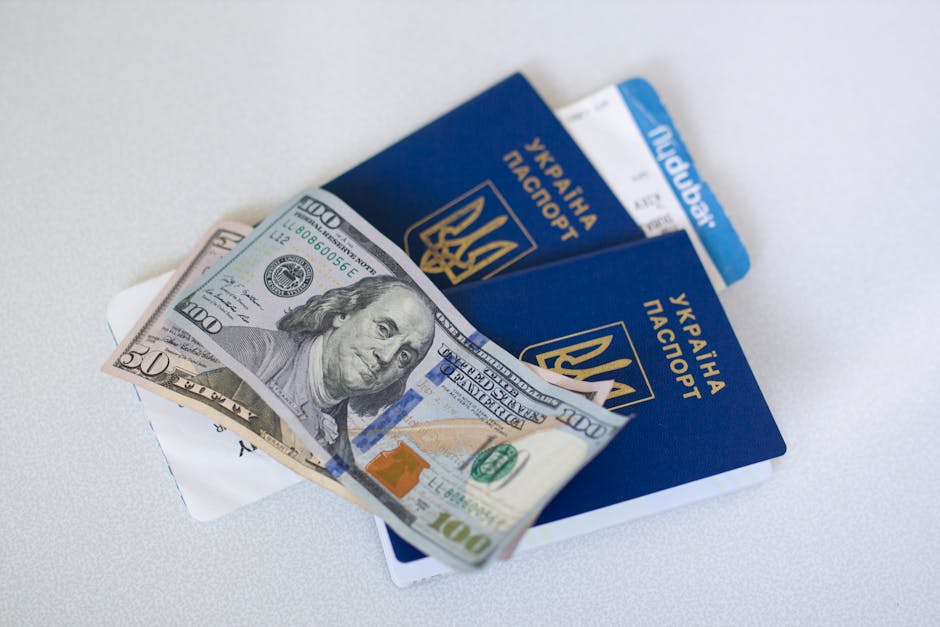
Students who have spent most of their lives in China often face a very practical question before going abroad: how much money should they bring, and what is the best way to carry it? After all, there are many situations where money is needed. If you do not bring it in the right way, you may find yourself at a loss when you actually need to spend it.
For students going abroad, tuition fees that can easily run into tens of thousands are a huge sum. If you carry that kind of money on you directly, parents will naturally worry, and you will probably feel uneasy the whole way. Today, let’s talk about the best way to carry money when studying abroad.
First, cash. Under normal circumstances, no matter which country you are entering or leaving, there are legal limits on how much cash you can carry across the border. If you bring too much cash, it can cause problems. And if you carry too much cash, security is also a serious concern.
So when studying abroad, we recommend bringing only a small amount of cash. There is no need to carry a large sum.
Now for the main point: when it comes to money abroad, bank cards do most of the work.
In fact, when studying abroad, aside from a small amount of cash, you really only need two cards: one UnionPay debit card and one UnionPay credit card. The debit card can be used in most places overseas for direct card payments, while the credit card is handy for emergencies.
Take tuition payment as an example. In the past, students had to buy foreign currency from a bank and deposit it onto a card, or exchange foreign currency directly before taking it overseas. But now, in countries such as the United States, the United Kingdom, Australia, and Singapore, most schools allow tuition to be paid directly with a UnionPay card.
As for safety, there is no need to worry either. UnionPay’s payment security system is quite reliable.
In terms of everyday use, bank cards can cover almost everything students need for living, studying, and getting around. For example, nearby malls, supermarkets, restaurants, and other places usually accept UnionPay cards. School training programs, exams, and everyday spending are also not a problem.
If you urgently need cash, you can also withdraw money directly from an ATM and just pay a small fee, which is useful as a backup.
In short, when it comes to money for studying abroad, as long as you have two cards plus a certain amount of cash, you can leave with peace of mind and study abroad with confidence.
Related Articles
Finding an MSc that will lead to a global career
Dec 23, 2025
How your business education could solve global challenges
Dec 18, 2025
4 reasons to study in Glasgow
Aug 2, 2024
Alumni interview: My MBA experience studying in France
Mar 10, 2024